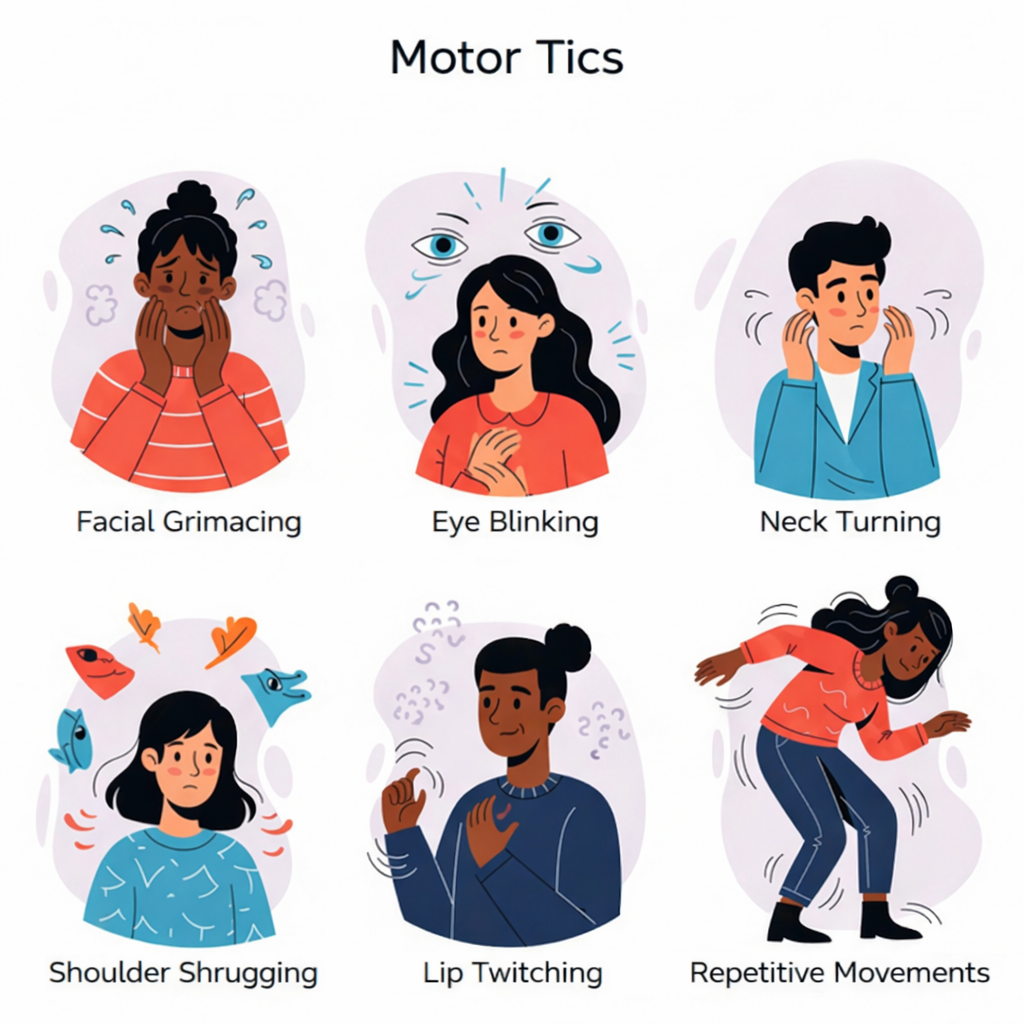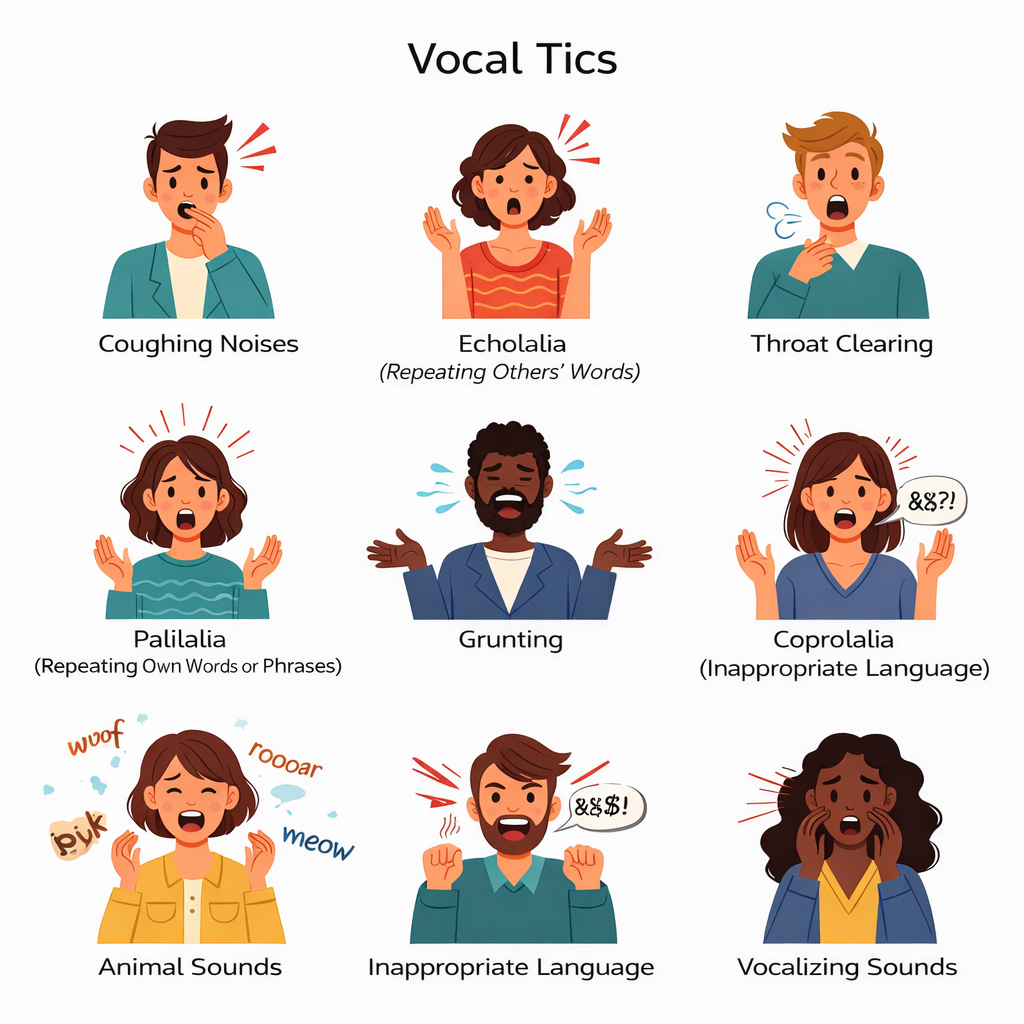



Tics
Tics are sudden, involuntary movements or sounds. They are not intentional habits or quirks.
Involuntary Nature: Tics occur without a child’s control. While they can be suppressed for a short time, doing so creates internal tension that eventually leads to their return.
Stress Sensitivity: Symptoms often worsen when a child is tense, tired, or under stress.
Beyond the Symptoms: If tics persist, they can impact a child’s self-confidence and social relationships.
Accurate assessment and supportive counseling are essential to help your child find their balance.
💡 Etiology
Differences in Brain Function and Neurotransmitters
Tics occur when there is a subtle difference in how the brain filters and processes information.
Think of the brain as having a natural "regulatory filter" that manages signals. When this filter functions differently, it can struggle to suppress unnecessary signals, leading to involuntary movements or sounds known as tics.
Genetic Factors
Tics often have a strong genetic component, meaning they frequently run in families. If a parent or close relative has experienced a tic disorder, a child may have a higher genetic predisposition to developing them.
These inherited factors play a key role in shaping how the brain functions and regulates movement.
Environmental Factors
Stress, fatigue, and anxiety do not directly cause tics; instead, they play a role in making latent symptoms more frequent or intense.
These environmental factors often act as "triggers" that worsen existing tics.